
Builders Risk Insurance in California: Covering a Home While It’s Built
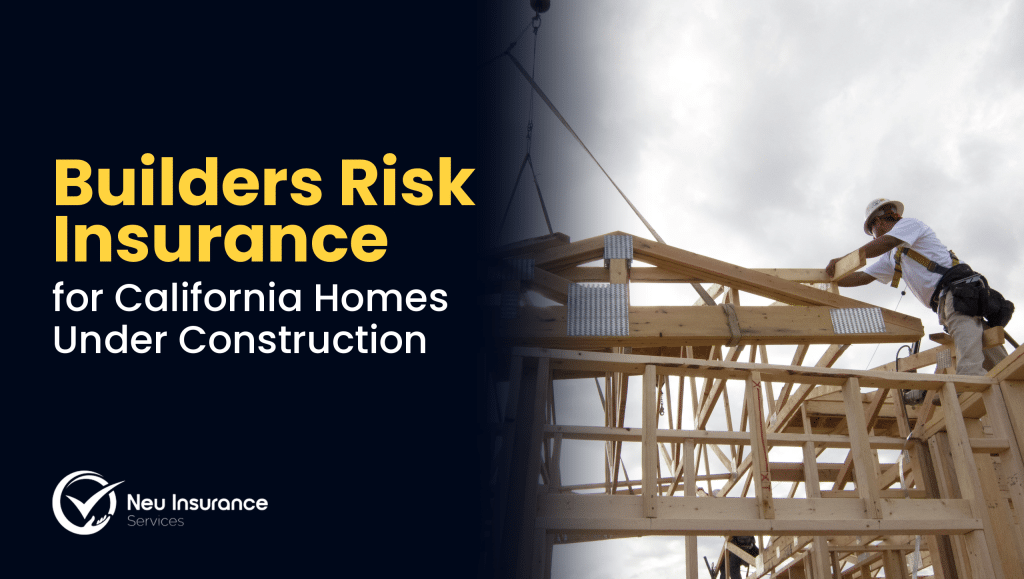
Quick answer: Builders risk insurance in California covers a home and its building materials while it is being built, remodeled, or rebuilt, because a regular homeowners policy isn’t written for a construction site.
- It covers the structure and materials against losses like fire, wind, theft, and vandalism during the project.
- It does not cover liability, worker injuries, earthquake, flood, or faulty work.
- Your contract or lender usually decides whether you or your contractor buys it.
What is builders risk insurance?
Builders risk insurance is property coverage for a building while it is under construction or major renovation. It protects the structure, materials on site, and often materials in transit or storage. It is also called course of construction insurance. It lasts for the project, then ends once the work is done or the home is occupied.
Think of it as temporary property insurance for a job site. A finished home has a homeowners policy. A rental has a landlord policy. A house that is still open walls, stacked lumber, and new windows waiting to go in needs something else.
At Neu Insurance Services in Rolling Hills Estates, we help homeowners, real estate investors, and contractors across Los Angeles County, the South Bay, and the rest of California insure projects from the first delivery of materials to move-in day. See our construction insurance page for the wider picture.
Does homeowners insurance cover a house under construction in California?
Usually not in full. A homeowners policy is written for a finished home that someone lives in. A ground-up build has no homeowners policy yet, and a big remodel can push past what your policy allows. Before work starts, tell your insurer about the project and ask what it will and won’t cover.
- New construction. There is no finished home to insure, so a homeowners policy usually doesn’t fit until the house is done.
- Large remodels. Many insurers want to know about major work. Some will endorse the policy. Others will say you need builders risk.
- Empty homes. If nobody lives in the house during the work, vacancy limits can apply. California’s standard fire policy uses a 60-day rule. Our vacant home insurance guide explains how it works and when construction counts as an exception.
- Materials. Lumber, windows, and appliances sitting in the driveway may not count as part of your home yet.
Some people search for home renovation insurance or construction insurance for homeowners. In most cases, what they need is a builders risk policy. A builders risk claim also stays off your homeowners policy, which can matter when you shop for homeowners coverage later.
Who needs builders risk insurance in California?
Anyone with money at stake in a construction project should have builders risk insurance in place. In California that often means homeowners doing a major remodel or ADU, owners rebuilding after a fire, real estate investors renovating a flip or rental, and contractors whose contracts make them responsible for the building until it’s done.
- Homeowners adding a second story, gutting a kitchen and bath, or building a new home on a lot.
- ADU builders. California has made accessory dwelling units easier to permit, and a garage conversion or backyard unit is still a construction site while it’s built.
- Fire rebuilds. Many Los Angeles County owners are rebuilding after the January 2025 Eaton and Palisades fires. Higher-value rebuilds may also fit our high-value dwellings coverage once the home is done.
- Real estate investors doing a flip, a value-add rehab on a 2-4 unit building, or a ground-up infill project. Our real estate insurance page covers the rest of an investor’s program.
- Contractors whose contract makes them insure the work. See our contractors insurance page.
Who usually pays for builders risk insurance: the owner or the contractor?
It depends on the contract. Many construction contracts make the owner buy builders risk insurance, while others put it on the general contractor. Lenders often require proof before they release funds. Read the insurance section of your contract before signing, so you don’t end up with two policies or, worse, none.
| Project | Who often buys it | What to check |
|---|---|---|
| Homeowner remodel with a general contractor | Either; the contract decides | The insurance clause, and whether the existing house is covered |
| New custom home on your lot | Often the owner, especially with a construction loan | Lender requirements and the completed value |
| Owner-builder project | The owner | Liability and workers’ comp if you hire workers directly |
| Investor flip or rehab | The investor | Vacancy wording, theft conditions, and liability |
| Fire rebuild | Often the owner | How it fits with your old policy’s remaining benefits |
Whoever buys it, the other parties can usually be named on the policy. Lenders often ask to be listed, and contractors may ask too. If the contract talks about additional insured status, read that section closely as well.
What does builders risk insurance cover?
Builders risk insurance covers direct physical loss to the building and materials during construction. Typical covered causes include fire, lightning, wind, hail, explosion, theft, and vandalism. Many policies also cover materials stored off site or being delivered. The exact list depends on the form, so read the causes of loss and the exclusions.
- The structure as it goes up, from the foundation to the roof.
- Materials and supplies on site that will become part of the building.
- Materials in transit or in storage, often with a separate, smaller limit.
- Temporary structures like scaffolding or fencing, on some policies.
- Optional add-ons such as soft costs (extra interest, permit fees, and other costs when a covered loss delays the job) and loss of rental income for investors.
Coverage is often written on a special form, which covers any cause of loss that isn’t excluded. Named-peril forms cover only the causes listed. Ask which one you’re being quoted.
What does builders risk insurance not cover?
Builders risk insurance is property coverage only, so it leaves real gaps. It does not cover injuries to workers or visitors, your liability, earthquake, or flood. It also excludes faulty workmanship and design, wear and tear, and most contractor tools. Some policies also limit coverage for the existing house in a remodel or for theft.
What the policy misses
- Liability. If a neighbor or delivery driver is hurt, builders risk won’t pay. You need liability coverage, and your contractor should carry general liability insurance.
- Worker injuries. Those belong under the contractor’s workers’ comp. If you are an owner-builder who hires workers directly, California can treat you as their employer, so ask about workers compensation before anyone starts.
- Earthquake and flood. Both are usually excluded. They may be available by endorsement or as a separate policy, often with their own deductibles.
- Faulty work and design. The cost to redo bad work is usually excluded, though damage that results from it may be covered. The wording matters.
- Tools and equipment. Contractors insure their own tools and equipment separately.
- The existing house. On a remodel, some forms cover only the new work. Ask how the existing structure is handled.
- Theft conditions. Some policies only cover theft of materials once they’re installed or locked up.
- Code upgrades. After a loss, the city may require upgrades. That is ordinance or law coverage, and it may need to be added.
None of these gaps are unusual for builders risk insurance in California. They just need to be planned for before the first wall goes up.
How much does builders risk insurance cost?
There’s no single price for builders risk insurance in California. Insurers usually figure the premium from the project’s completed value and the length of the policy term. Location, wildfire risk, construction type, security, deductible, and add-ons like soft costs all change the number. The fastest way to know is a quote built on your plans, budget, and schedule.
- Completed value. Insure to what it costs to finish the project, not what the house might sell for.
- Term. A longer build means a longer policy.
- Location and wildfire risk. Hillside and brush areas in Los Angeles County can narrow the market. Some projects go to specialty or excess and surplus lines markets.
- Construction type. Wood frame and masonry price differently.
- Site security. Fencing, cameras, and locked storage can help with theft terms.
- Deductible and add-ons. Higher deductibles lower the premium. Soft costs, rental income, and earthquake add to it.
When does builders risk coverage start and end?
On California projects, builders risk insurance should start before materials arrive or work begins, not after the first problem. It usually ends when the project is finished, the home is occupied or put to its intended use, the policy term runs out, or the property is sold. Plan the hand-off to your next policy before that date.
- Start: bind it before demolition, delivery, or groundbreaking. Some insurers won’t write a project that’s already underway, or they’ll ask more questions first.
- Extensions: California projects often run past schedule. Ask to extend before the term ends.
- Finish: move to homeowners insurance when you move in, or to a landlord policy if it’s a rental. Our landlord insurance in California guide covers that next step.
- If the house will sit empty after the work ends and before it sells or rents, vacancy rules come back into play. See our vacant home guide.
What should California owners check before construction starts?
Before construction starts, confirm your contractor’s license and insurance, read the contract’s insurance clause, and decide who buys builders risk insurance. Then set the right limit, check your lender’s rules, and make sure liability and workers’ comp are in place. A short check now can prevent a denied claim later.
- Check the license. Use the CSLB license lookup. Since January 1, 2025, work of $1,000 or more, or any work that needs a permit or uses hired workers, requires a licensed contractor (CSLB).
- Get certificates. Ask for proof of the contractor’s general liability and workers’ comp before work starts.
- Read the insurance clause. Look for who buys builders risk, who is named on it, and any additional insured or waiver requirements.
- Set the limit. Use the full completed value, including materials and labor. Update it if the budget changes.
- Check your lender. Construction loans often spell out the limit, deductible, and who must be named.
- Plan for gaps. Decide on earthquake, flood, soft costs, and existing-structure coverage up front.
Getting a quote with Neu Insurance Services
We make getting builders risk insurance in California simple. We look at the whole project, not just one policy, so you don’t find the gaps after a loss.
- Tell us about the project. The address, the type of work, the budget or completed value, the start date, and how long it should take.
- Send the paperwork you have. Your construction contract, lender requirements, and your current homeowners or landlord policy.
- We shop the market. We work with trusted national carriers and compare builders risk insurance quotes from them and from excess and surplus lines markets, which helps with wildfire areas, vacant rehabs, and larger custom homes.
- We review the contract. Our contract review checks what your contract asks you to carry, so the policy matches it.
- We help if something goes wrong. If you have a loss during the project, our claims assistance helps you through it.
We also cover what comes after the build: homeowners, landlord, and property and casualty coverage for the finished home or rental.
Frequently asked questions
Can a homeowner buy builders risk insurance?
Yes. A homeowner can buy builders risk insurance for a new home, a major remodel, an ADU, or a rebuild. Your contract should say whether you or your contractor buys it, so you don’t end up with two policies or none.
Is builders risk insurance required in California?
No state law requires most homeowners to carry it. But construction lenders usually require it, and many construction contracts assign it to the owner or the contractor. If you have a loan or a written contract, check both.
Is course of construction insurance the same as builders risk?
Yes. Course of construction, or COC, is another name for builders risk insurance. Both cover a building and its materials while the work is going on.
Does builders risk insurance cover theft?
Often, yes, for building materials that are installed or stored on site, sometimes only if they are locked up or fenced. Contractors’ tools and equipment are usually not covered and need their own policy.
Does builders risk cover the existing house during a remodel?
Not always. Some policies cover only the new work and materials. Ask whether the existing structure is covered, or keep your homeowners policy in force and tell that insurer about the project.
Does builders risk insurance include liability coverage?
No. Builders risk covers property, not injuries or damage to other people’s property. You still need liability coverage, and your contractor should carry general liability and workers’ comp.
How long does a builders risk policy last?
It runs for a set term that matches your build schedule. If the project runs late, ask to extend the policy before it ends, because a lapse can leave an unfinished house uninsured.
What happens to builders risk when construction is finished?
Coverage usually ends when the work is complete, the home is occupied, or the policy term runs out. Line up homeowners or landlord insurance so it starts the day builders risk stops.
Can I get builders risk insurance for a fire rebuild in Los Angeles County?
Yes. Rebuilds after the 2025 Eaton and Palisades fires need coverage while the new home goes up. Options depend on the site and wildfire risk, so an agency that works with several markets can compare them.
Does Neu Insurance Services write builders risk outside California?
Yes. Neu Insurance Services is based in Rolling Hills Estates and is licensed in all 50 states, so we can help with projects in other states too.
Talk to Neu Insurance Services
Neu Insurance Services is at 4040 Palos Verdes Dr N #107, Rolling Hills Estates, CA 90274. We’re licensed in all 50 states and help homeowners, real estate investors, and contractors across Los Angeles County and beyond. Email us at neu@arroyoins.com.
Planning a remodel, ADU, rebuild, or new home? Contact Neu Insurance Services or call +1 310-515-0382 and we’ll get builders risk insurance in place before the work starts.